
Forestland Grazing & Silvopasture Program
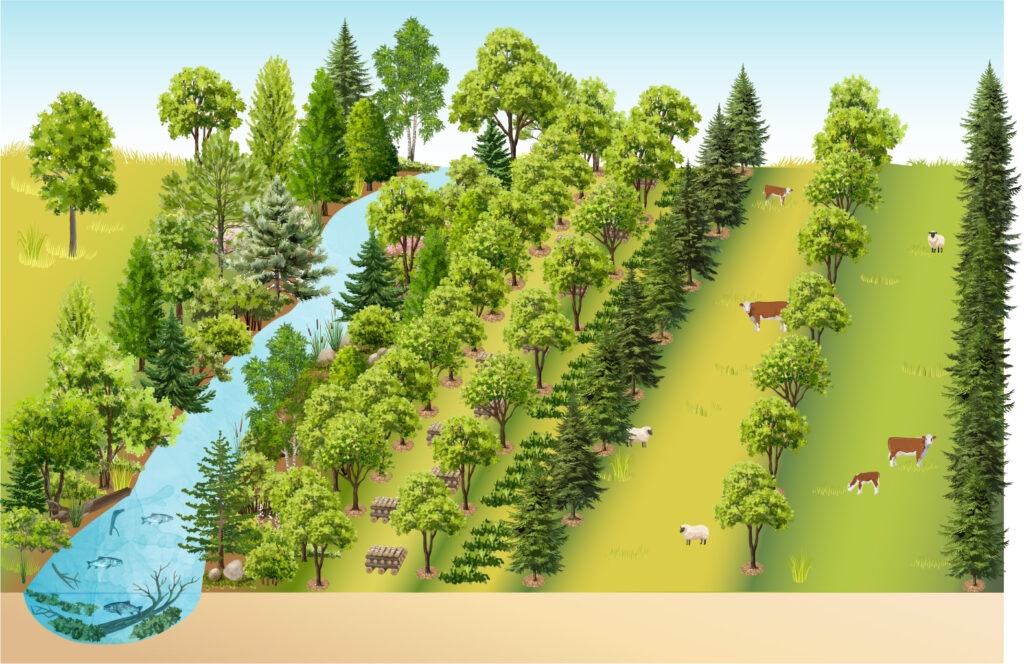
Build resilient land, healthier forests, and productive farms.
Forestland Grazing
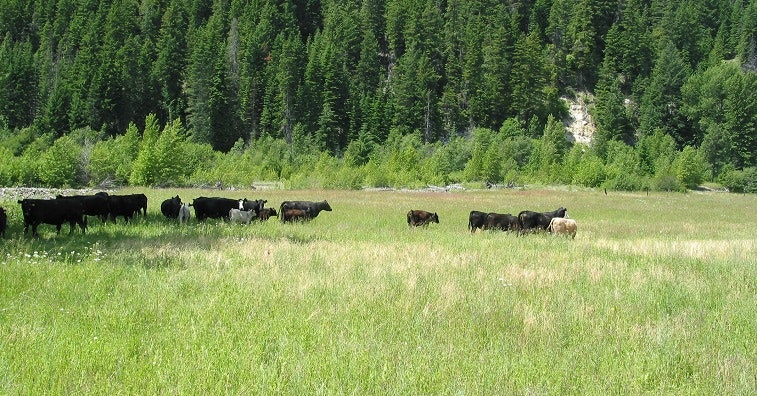
What is Forestland Grazing?
Forestland grazing is the practice of allowing livestock to graze within existing forested areas. It typically involves minimal initial modification to the forest and uses what is already present—trees, understory vegetation, and natural openings.
This approach is often starting point management—helping landowners utilize underused forestland while beginning to improve conditions over time.
How It Works
- Livestock are introduced into forested areas seasonally or rotationally
- Grazing targets grasses, brush, and understory vegetation
- Management focuses on timing, intensity, and distribution of grazing
It may or may not include thinning, planting, or reseeding—those improvements often come later.
Common Conditions in Pend Oreille County
Forestland grazing is often suitable where:
- Forests are overstocked or moderately dense
- There is existing forage or browse
- Landowners already have livestock but unused forest acreage
- There is a need to manage fuels and understory growth
Key Benefits
- 🔥 Fuel Reduction
Grazing reduces grasses and fine fuels that contribute to wildfire spread - 💰 Low Entry Cost
Uses existing forest with minimal upfront investment - 🌿 Vegetation Management
Helps control brush and some invasive species - 🐄 Expanded Grazing Area
Limitations to Consider
- Forage quantity and quality may be inconsistent
- Dense canopy may limit grass growth
- Risk of overgrazing without proper management
- Tree damage from rubbing or browsing can occur
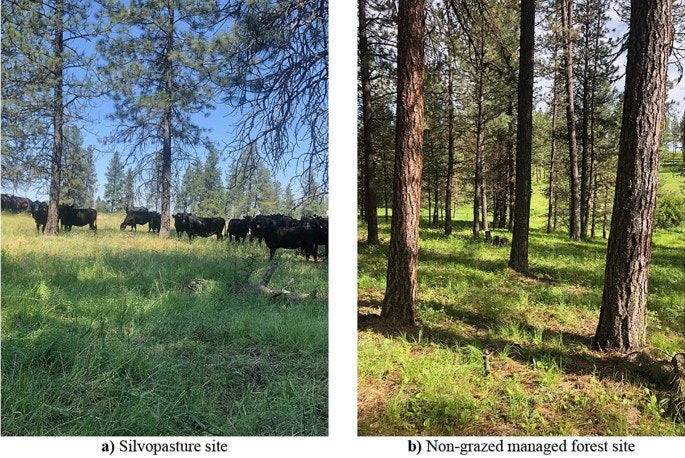
Silvopasture is a fully planned and managed system that intentionally integrates:
- Trees
- Forage (pasture grasses and legumes)
- Livestock
Unlike forestland grazing, silvopasture involves active design and management to optimize all three components.
Design Principles for Pend Oreille County
Well-designed silvopasture systems in this region often include:
- 40–60% canopy cover after thinning
- Cool-season forage species suited to local precipitation
- Rotational grazing to protect soil and vegetation
- Species selected for:
- Cold tolerance
- Drought resilience
- Wildlife compatibility
Key Benefits
- 🐄 Improved Livestock Performance
Shade reduces heat stress; shelter improves winter survival - 🌱 Higher and More Consistent Forage Production
Managed light levels improve grass growth - 🔥 Wildfire Resilience
Reduced fuel loads and improved spacing of vegetation - 🌲 Improved Forest Health
Thinning reduces competition and increases tree vigor - 💰 Multiple Revenue Streams
Livestock + timber + potential specialty crops
Management Requirements
Silvopasture requires more active management than forest grazing:
- Planned grazing rotations
- Monitoring forage recovery
- Maintaining fencing and water systems
- Managing tree growth and spacing over time
When It’s Most Appropriate
Silvopasture is best suited for producers who:
- Want a long-term, high-functioning system
- Are willing to invest in planning and infrastructure
- Want to maximize productivity of forestland
- Are interested in cost-share or funded projects